Zusammenfassung
Developing your own wildlife camera allows for full control over image quality, data privacy, and hardware components without dependency on external cloud providers. The project combines technical requirements, such as long battery life, with the personal learning objective of gaining practical experience in electronics development.
Diese Zusammenfassung wurde mit KI-Unterstützung erstellt.
Wildlife photographers always face a challenge when the photo season comes to an end: What do I do now? Since I have already implemented various DIY projects, the question quickly arose whether I could develop my own wildlife camera with everything that is important to me. On the following pages, I want to give you an insight into this. This article replaces my original Part 1 from 2025 and serves as the introduction to a multi-part series about the project.
Why build it yourself?
Anyone who buys a finished wildlife camera is almost always buying a complete package of hardware, an app, and the cloud. The apps want another account, and whether the device will still be supported in three years is decided by someone else. Same for the cloud. I am by no means paranoid, and a potential cloud requirement was not the deciding criterion either, but it's about the overall package for me. Because let's be honest, the image quality of many wildlife cameras is not exactly breathtaking, and I simply wondered if I couldn't achieve that myself. My requirements were:
- Compact and inconspicuous. The camera should disappear in the forest, not stand out.
- Autonomous for weeks. The goal is a six-week runtime with a single battery charge.
- My data remains my data. Local storage on an SD card, status messages later via mobile network to my own server. No third-party cloud.
- Repairable and understandable. I must be able to replace every component and understand every function.
Additionally, there is another reason: I wanted to learn it. Professionally, I deal a lot with product certifications, product safety & co. But this is often limited to evaluating documents. A personal project that unites electronics, firmware, radio communication, 3D printing, and power-saving artistry in one device is the best school I can imagine to regain more hands-on experience.
The Heart: ESP32-S3
I also use this chip for home automation projects, so I already have a lot of experience with it. Therefore, the conclusion was close here that an ESP32 could be the suitable device. Even the most power-efficient Raspberry Pi models were ruled out. At the center sits an ESP32-S3 module with 16 MB Flash and 8 MB PSRAM. The chip brings everything a wildlife camera needs: a camera interface for common image sensors, sufficient reserve for 5-megapixel images, WLAN for maintenance (a mini web server runs on the ESP), and above all, a deep sleep mode in which it consumes almost nothing. This is the actual discipline of a wildlife camera: It is for 99.9 percent of its life a sleeping device that only needs to wake up at the right moment.
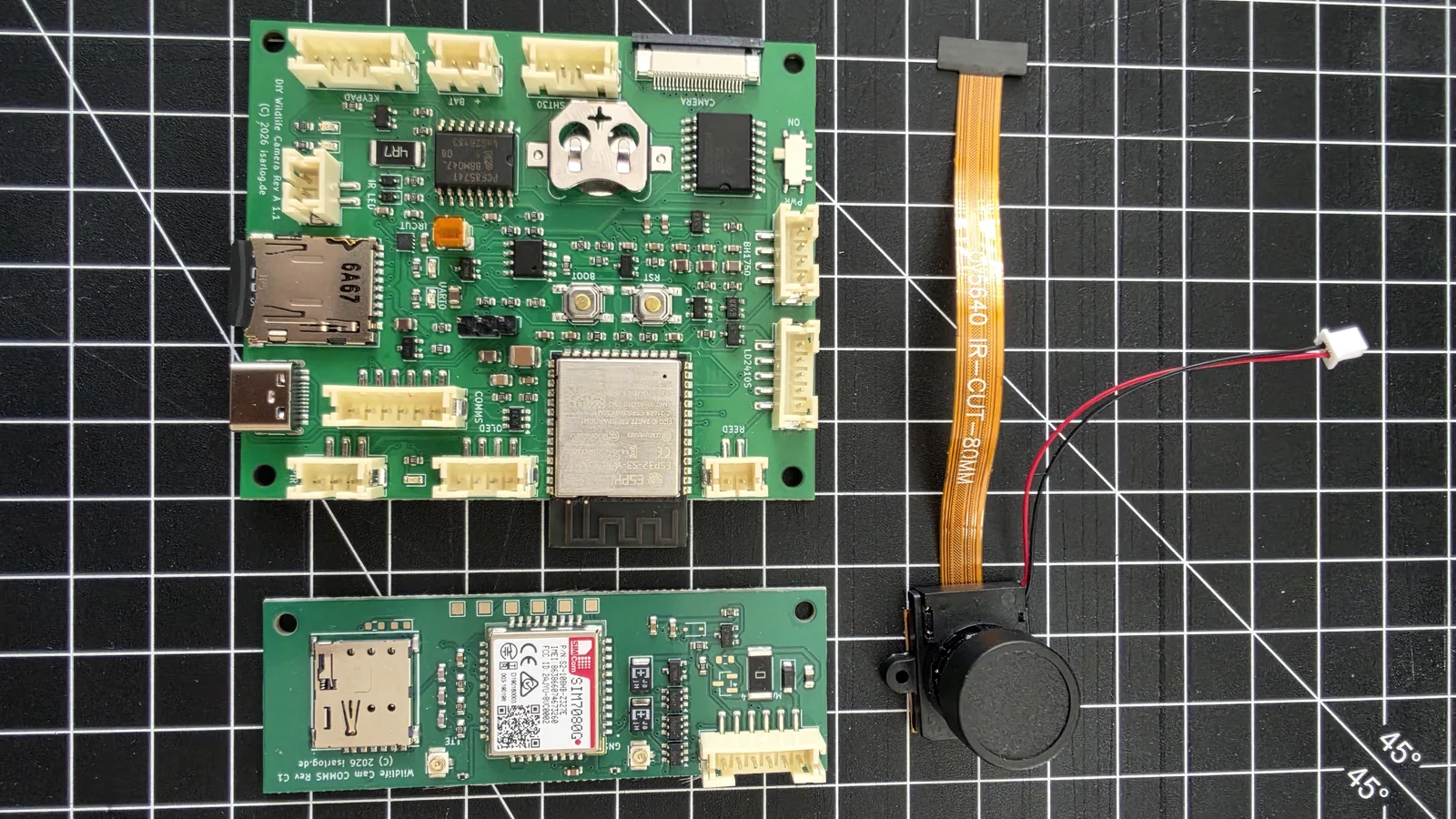
As an image sensor, I use an OV5640 module with a mechanically switchable IR cut filter: color photos during the day, free view at night for the invisible infrared flash. The firmware also supports the simpler OV2640.
Waking up when something moves
Classic wildlife cameras use a PIR sensor that reacts to heat movement. This is reliable but coarse. I combine two senses: a radar module (LD2410S), which detects presence with a continuous consumption of around 300 microamperes, and optionally a PIR as confirmation. Only when both agree is it triggered. This saves false photos from swaying branches and thus saves power and storage. In addition, there is a light sensor (BH1750) for the day/night decision, a climate sensor (SHT30), and a precise real-time clock (DS3231) for correct timestamps and time-lapse recordings.
Power: one cell, no converter
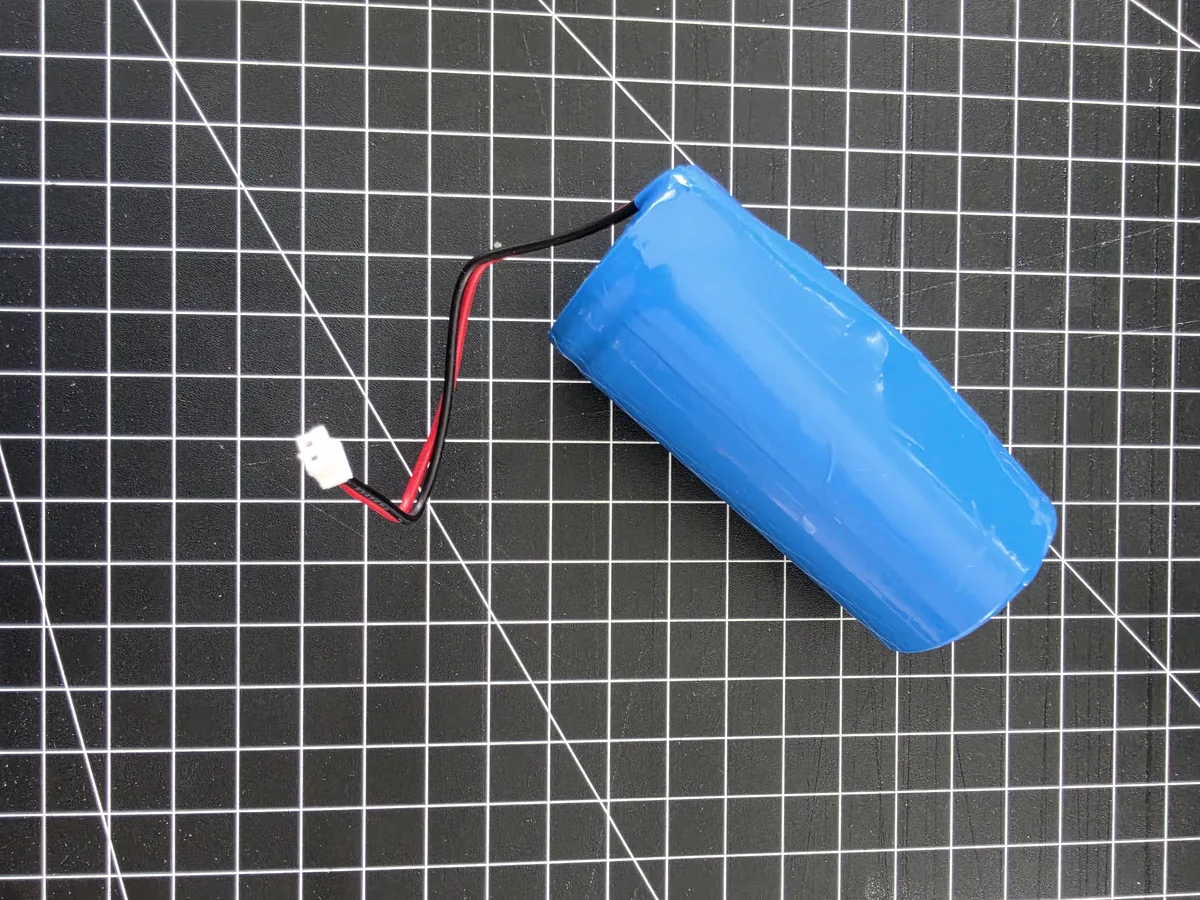
Regarding the power supply, I made a decision that runs through the entire design: a single LiFePO4 cell with 3.2 Volts and 6 Ampere-hours. Its voltage from full to empty is so close to the 3.3 Volts of the electronics that I completely save myself the lossy voltage converter. The cell powers the system practically directly. LiFePO4 is also well-behaved in cold weather and survives far more charge cycles than classic lithium batteries.
The calculation behind it: 6,000 mAh divided by six weeks results in a budget of about 6 milliamperes on average. The sleep consumption of the finished board is around half a milliampere. The rest of the budget belongs to the wake-up moments: photographing, saving, and occasional status reports. Every design decision in the project must be measured against this figure. Whether it proves true will show.
The Turning Point: From Breadboard to Own PCB
I started the project last year in the classic way: development board, breadboard, loose cables to the sensor modules. For testing, this is exactly right. But at some point, the question arose how this was supposed to become a device. The usual path would have been to transfer everything to perfboard and solder wire bridges for hours. The longer I thought about it, the clearer it became: The result would have been a soldered breadboard, more tinkering than the ambitious DIY project I envisioned. Technically a step backward as well: A mess of wires saves no power, fits in no compact housing, and can never be cleanly reproduced if two boards are to be built.
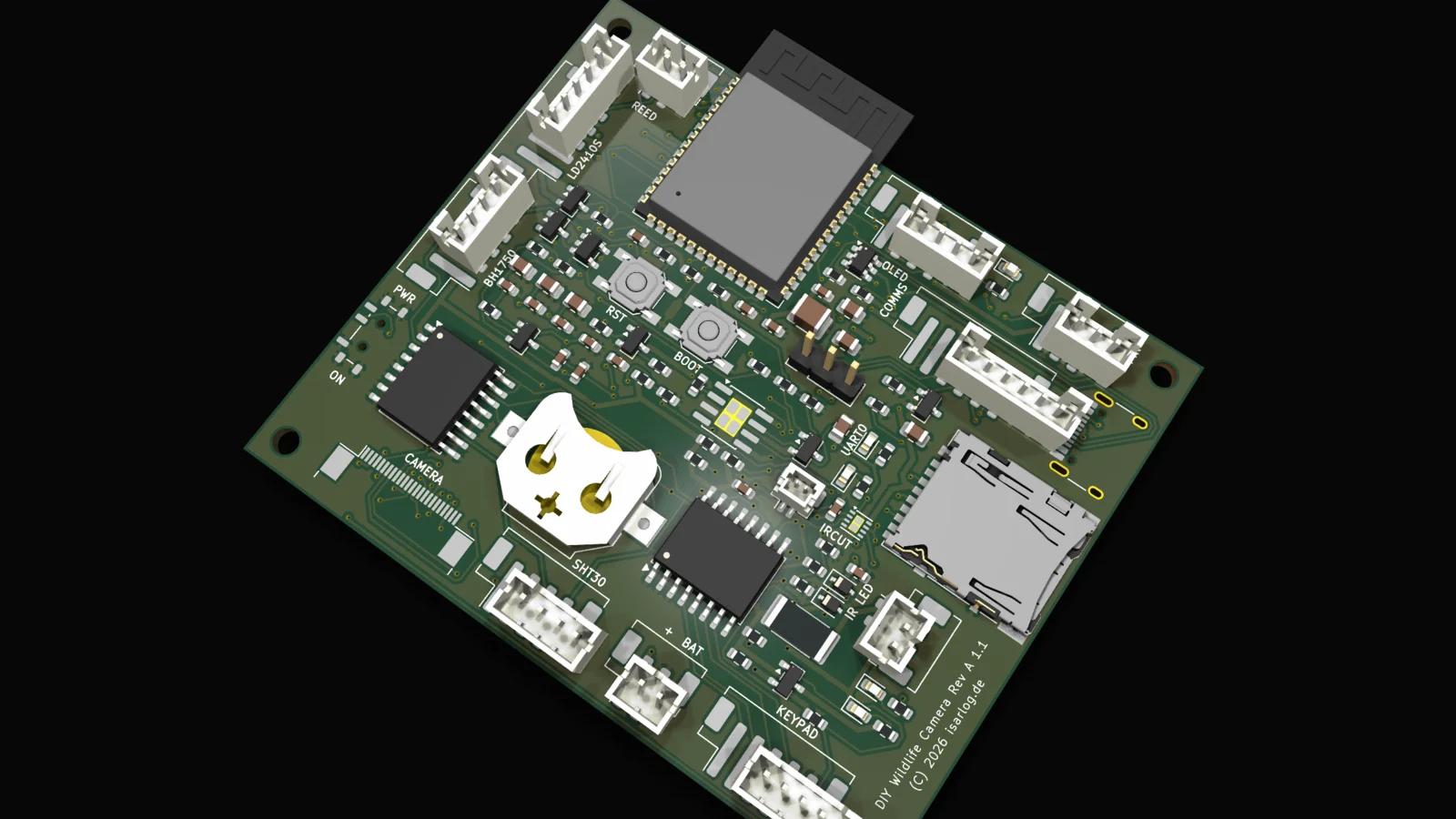
So, I let the project sit for a while and made the cut this year by designing an own PCB. For me, that was the step from tinkering to developing: The board is populated directly with the ESP32 module, plus the charging circuit, SD card, IR flash driver, mechanical IR filter switching, and sockets for all sensors. I had them manufactured and machine-populated as a small series by a PCB service provider. I didn't have to solder anything so far.
You can imagine that this is no cheap fun, and naturally, one wonders about the meaningfulness of such a project. For me, however, it is as I said about learning, and perhaps some of you will find similar enthusiasm in it. Despite all previous costs, I am currently at a price significantly below that of an officially purchasable wildlife camera with a mobile communication module.
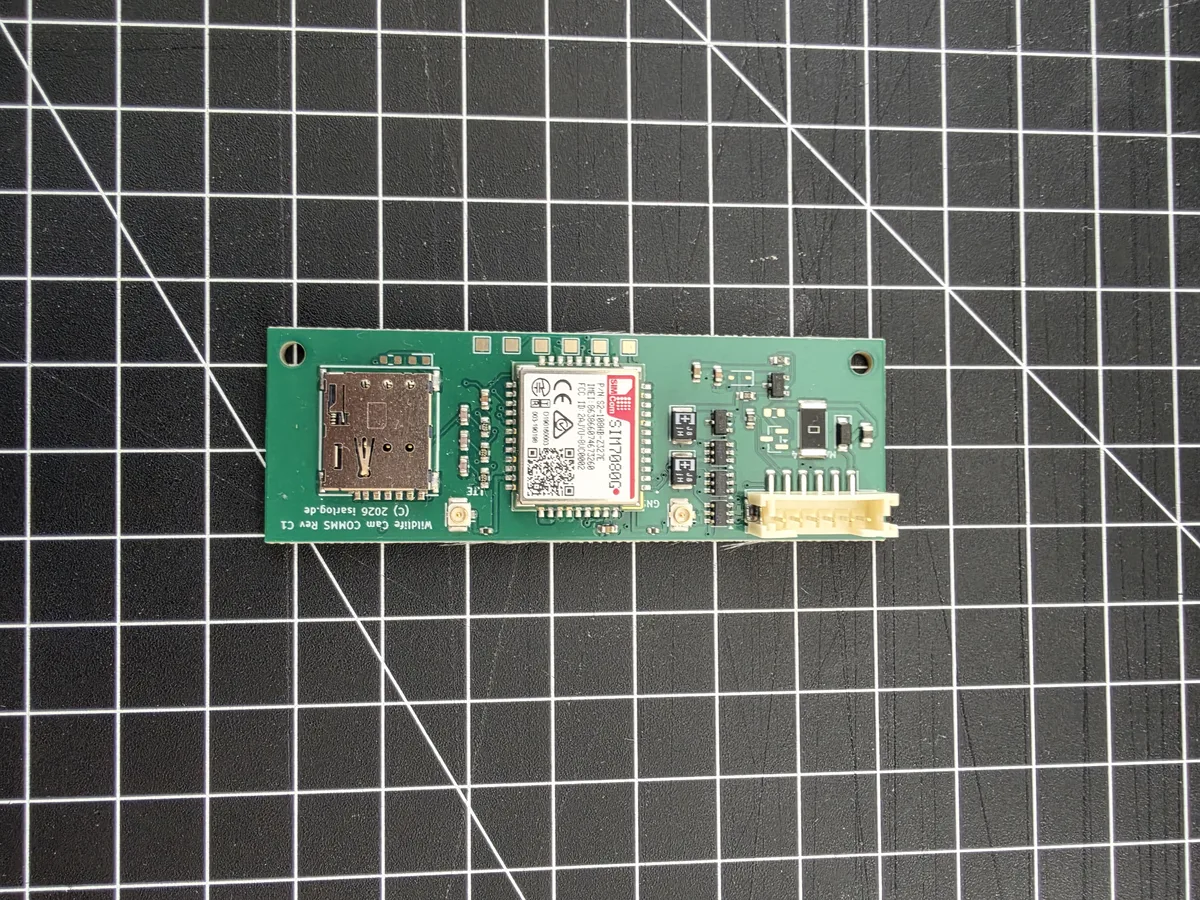
I have already planned this as a pluggable mobile communication module (Cat-M with GPS); it is already produced and with me. The idea is that the camera reports to my own server at intervals, providing information on battery level, temperature, and photo counter. No livestream, no cloud, just a short greeting from the forest to my own infrastructure. But also with the last known location.
Where the project stands today
The moment that the whole project has been working towards is here: The own board is running. It recognizes the camera and SD card, has taken its first photos, and can be maintained via a self-built Web Cockpit in the browser. Battery voltage as a trend curve, live diagnosis of all components, test trigger, and even firmware updates are now running wirelessly. WLAN is purely a workshop tool here. In field operation, it remains off because it is the biggest power consumer on board.
The path there was more educational than planned. Just one example: The board could not be flashed for hours. In the end, it was a chain of three causes, the most important of which was that the circuit collapses at every load peak without a connected battery. Such insights flow directly into the to-do list for the next PCB revision. I will tell the whole story about PCB design in Part 2.
AI in the project
A word on the workflow, because it belongs: For schematics, layout, firmware, and troubleshooting, I work with AI support. This is a powerful tool, but just a tool and not an automaton. It is not like you press a button and get a finished board. The decisive moments of this project were many individual tests and the review of data sheets. Those who do not bring the basics—meaning measuring voltages, reading data sheets, and classifying error patterns—will be led astray by even the best AI. But: with these basics, it becomes an amplifier and can certainly move many projects to their final stage. But let that be said; this is also not cheap.
The Parts List (as of today)
| Assembly | Component |
|---|---|
| Controller | ESP32-S3-WROOM-1 (16 MB Flash, 8 MB PSRAM) |
| Image Sensor | OV5640 (5 MP) with mechanical IR cut filter |
| Motion Detection | Radar LD2410S + optional PIR AM312 |
| Sensors | BH1750 (Light), SHT30 (Climate), DS3231 (Clock) |
| Power | LiFePO4 3.2 V / 6 Ah, Charge Controller CN3058E |
| Storage | microSD |
| Night Vision | IR LED Flash, IR Cut Driver DRV8837 |
| Communication | WLAN (Maintenance only), later Cat-M Module with GPS |
| PCB | Own design, populated small series |
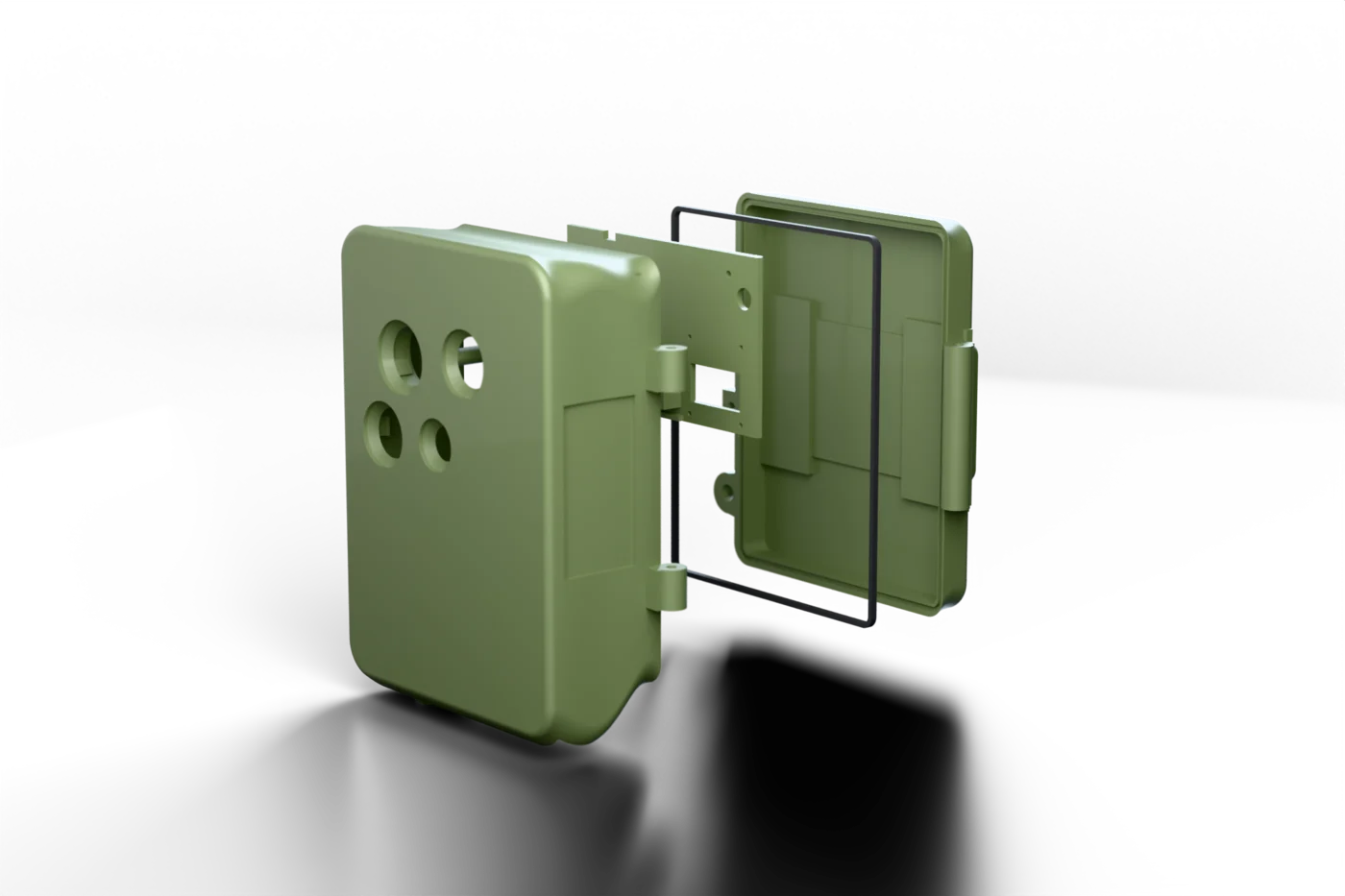
What's next
In Part 2, it's all about the own board: design decisions, manufacturing as a small series, and the lessons of commissioning, which cost me more nerves than the entire layout. Part 3 is dedicated to the housing: CAD and 3D printing. This will be followed by the final assembly in Part 4 and the first experiences outdoors in Part 5.