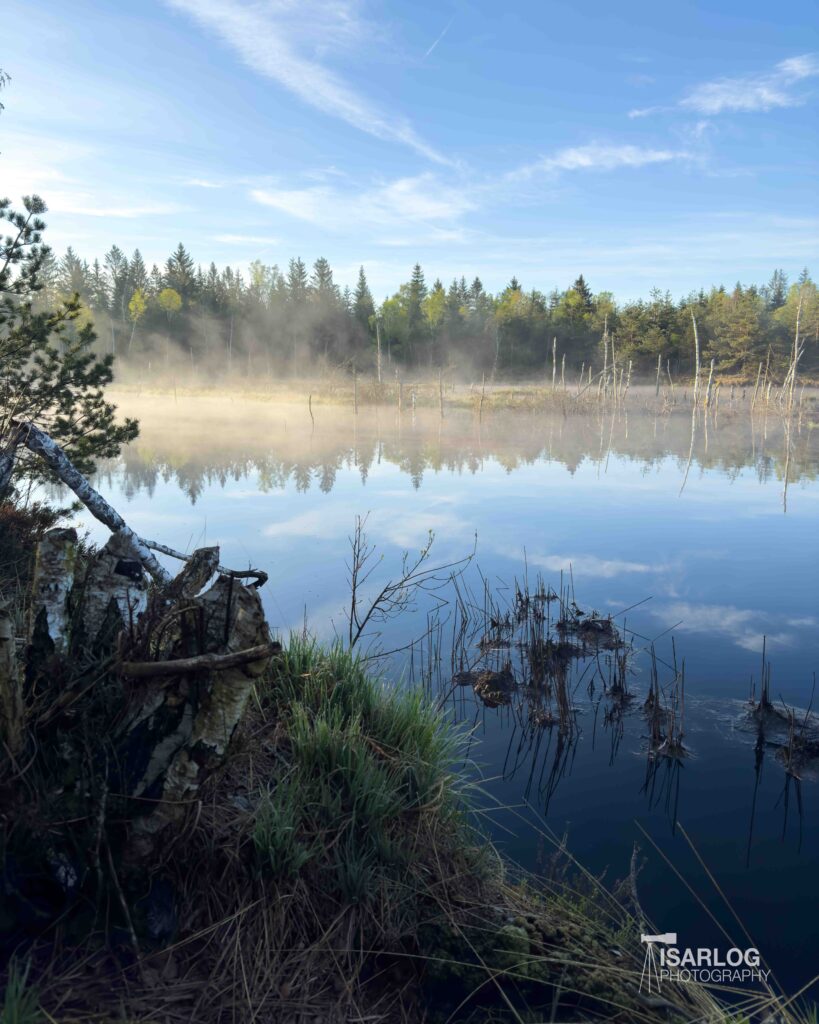
Tracks in the Bog
Forests and bogs are quiet, living places to me — places where I feel at home. And yet I also sense a conflict, because even our well-intended actions as humans often leave deep marks on nature.
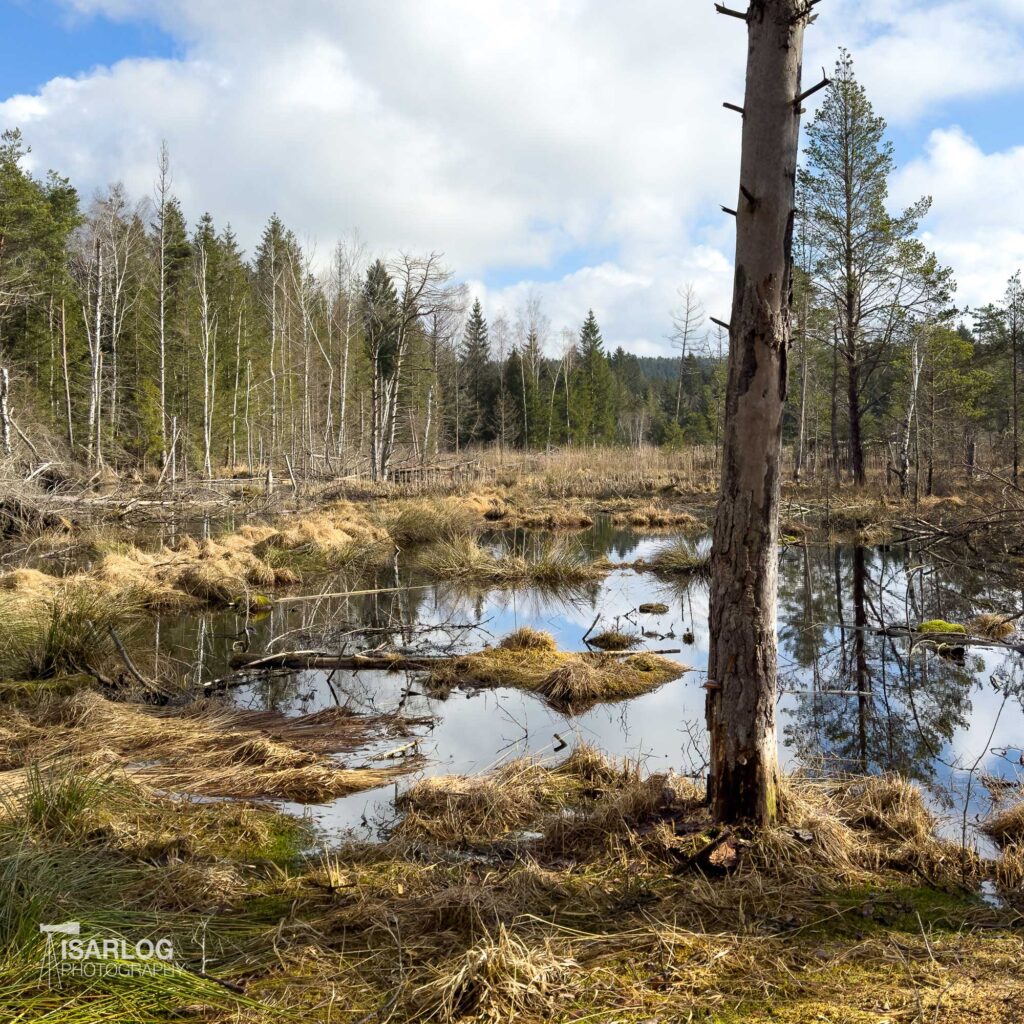
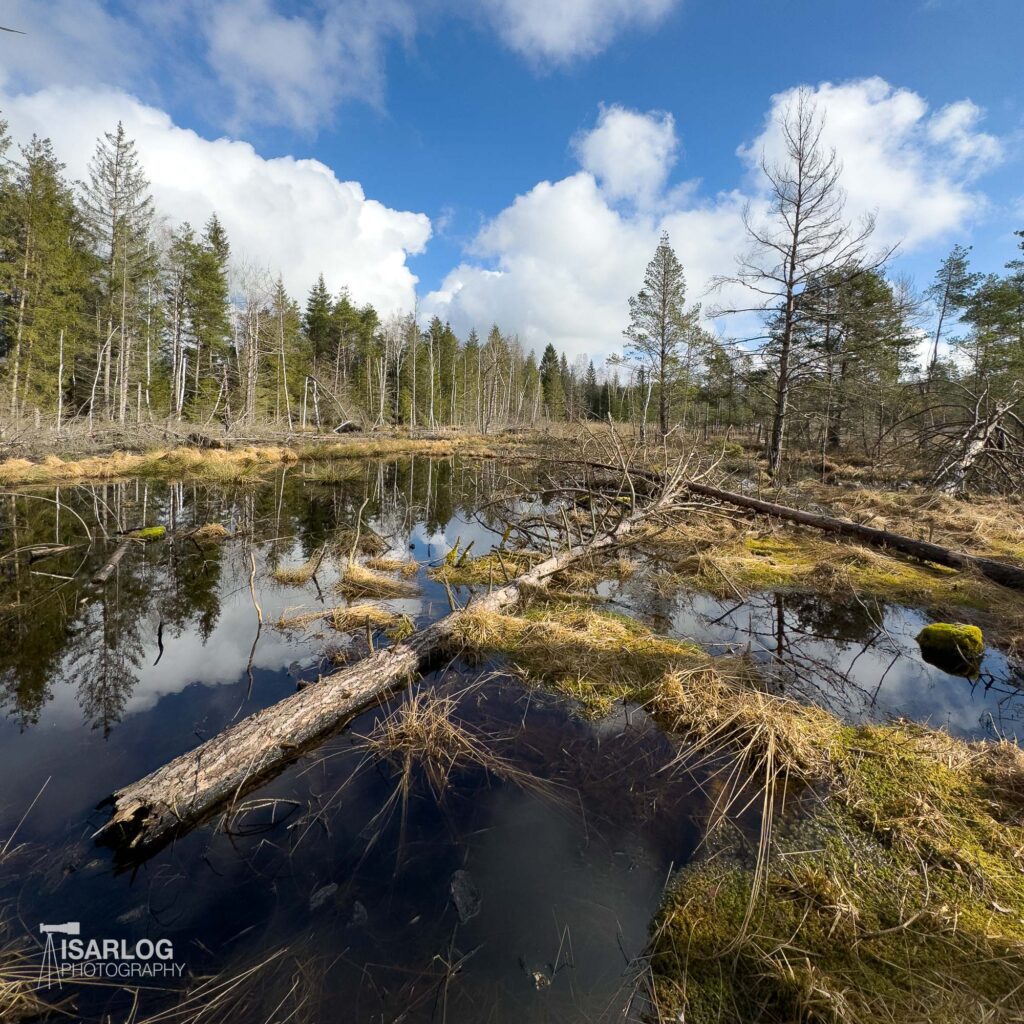
A former peat extraction area near Munich, restored and now — at least in parts — left to its own devices again: a place where nature seems to reclaim what was once taken. But not everything is as wild and untouched as it appears. Forestry, fish ponds and hunting continue to leave their marks. Even the beaver, which has returned and helps shape the landscape, is not welcome everywhere. A place full of contrasts — between nature’s return and human intervention, between wild beauty and quiet conflicts.
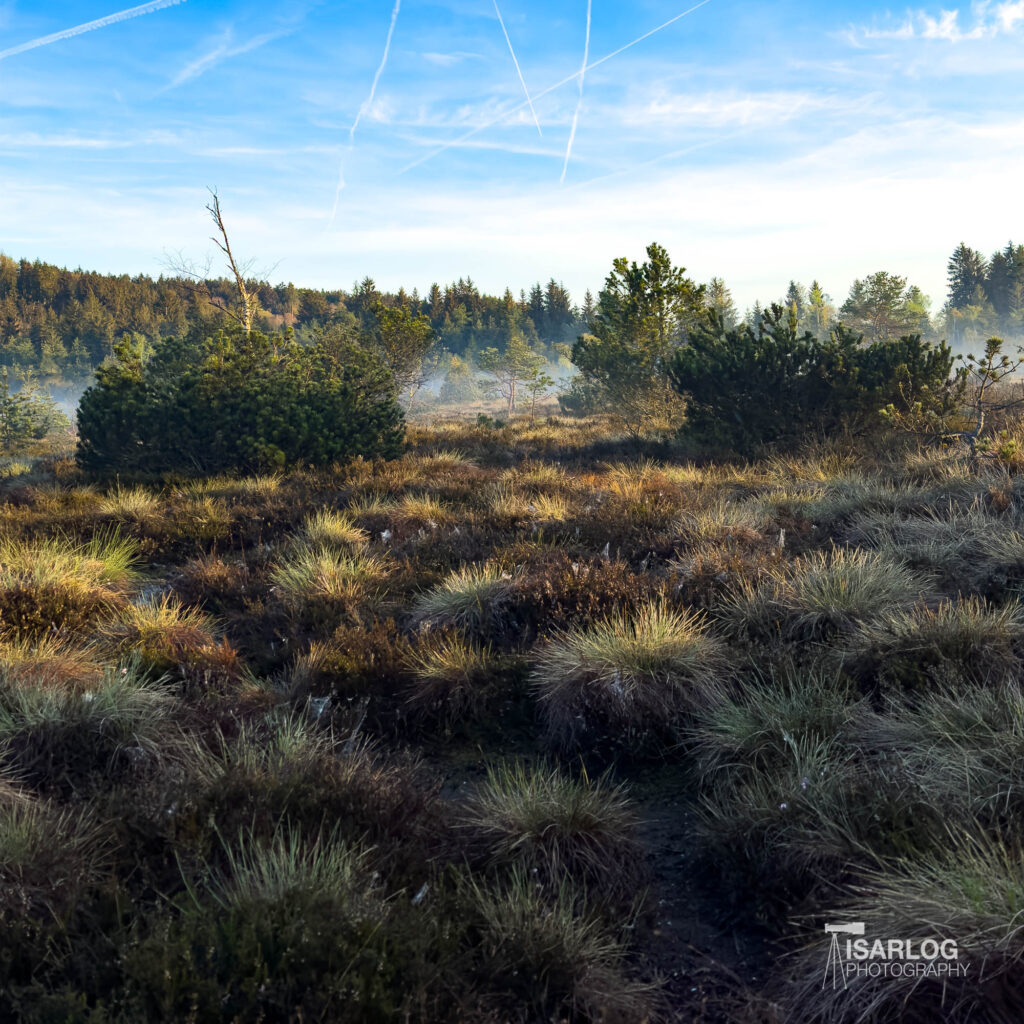
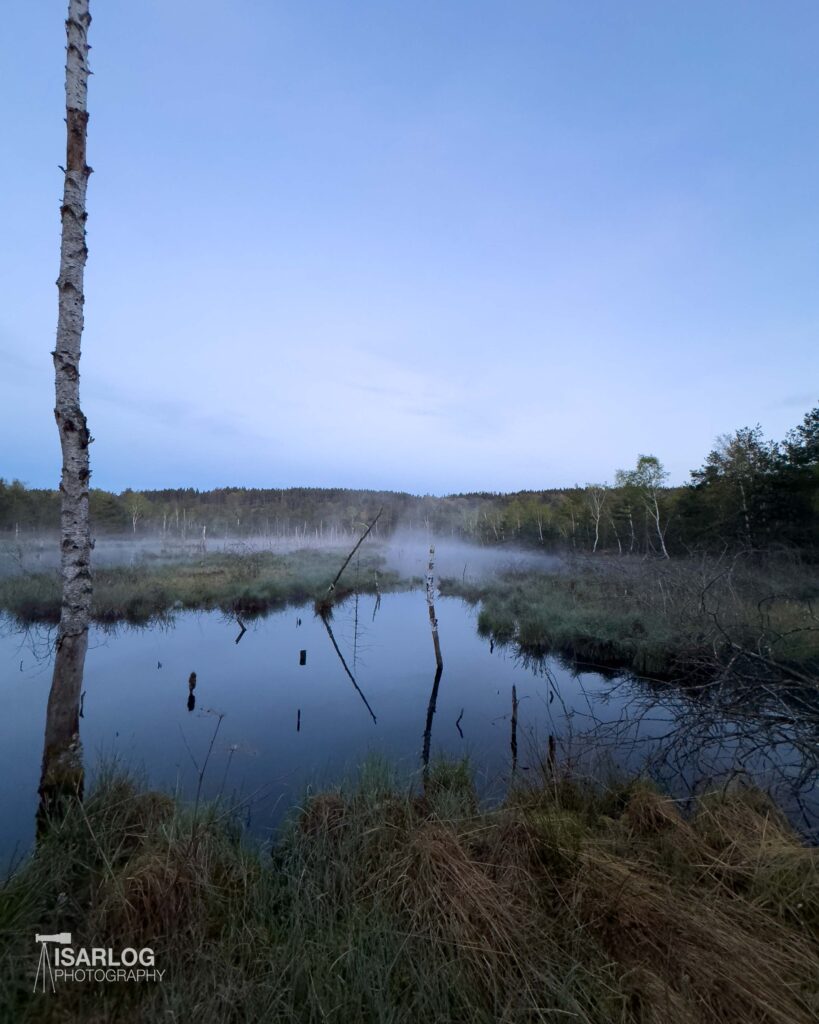
A thin veil of mist lies over the bog lake’s water, dead tree trunks rise from the surface like silent witnesses, and the first rays of light tint the landscape a cool blue.
For now, the bog lake lies still in the first light of day, filled only with mist and the calls of birds. But it will be only a few hours before the silence changes: chainsaws will roar, vehicles will pass nearby, and the animals will retreat. A brief moment of peace — before everyday human life returns.